

 See My Latest Article on HelloNation

What does minimally invasive dentistry mean?
Minimally invasive dentistry is an approach that aims to prevent oral disease, detect problems early, and preserve as much healthy tooth structure as possible. Instead of automatically removing large areas of tooth tissue or proceeding directly to extensive treatment, care is matched to the size, activity, and risk of the problem.
The approach is especially associated with dental decay, but the same principle can apply to repairing worn, cracked, or damaged teeth. The goal is not to avoid treatment at all costs. The goal is to use the least destructive treatment that can reliably control disease and protect the tooth over time.
How is it different from traditional dental treatment?
Traditional cavity treatment often focuses on removing decay and placing a filling. That remains appropriate when a cavity has created a hole or weakened the tooth. Minimally invasive dentistry adds more attention to what happens before and after a restoration.
For example, an early area of mineral loss may not need drilling. Depending on its location and activity, it may be managed with fluoride, improved plaque control, dietary changes, a sealant, or careful monitoring. If a filling is necessary, the preparation may be limited to the damaged area rather than extending into healthy tooth structure simply to create a larger restoration.
This approach recognizes that dental decay is a disease process, not just a hole in a tooth. Bacteria, dietary sugars and starches, saliva, fluoride exposure, dry mouth, and brushing habits all affect whether a lesion progresses or becomes inactive.
Can early tooth decay be reversed without a filling?
Sometimes. The earliest stage of decay occurs when acids remove minerals from enamel without creating a true cavity. A white or chalky spot may be an early sign.
At this stage, the tooth can sometimes regain minerals through saliva and fluoride. Management may include:
- Brushing twice daily with fluoride toothpaste
- Cleaning between teeth each day
- Reducing frequent exposure to sugary or acidic foods and drinks
- Using professionally applied fluoride when risk is elevated
- Applying a sealant to protect grooves on back teeth
- Monitoring the area for changes over time
A lesion that has already formed a significant hole generally cannot be restored through brushing or fluoride alone. Once the tooth is structurally cavitated, a restoration or another carefully selected treatment may be needed.
What treatments are considered minimally invasive?
Minimally invasive care can include preventive, nonrestorative, and conservative restorative options. The appropriate choice depends on the tooth, the depth and location of the lesion, symptoms, and the likelihood of progression.
Common examples include:
Fluoride treatment
Fluoride strengthens enamel and supports remineralization. It may be used in toothpaste, varnish, gels, rinses, or prescription-strength products for people with elevated decay risk.
Fluoride is not a substitute for removing a large cavity, but it can help prevent early lesions from progressing and may help stabilize areas of weakened enamel.
Dental sealants
Sealants are thin protective coatings placed in the natural grooves of teeth, particularly molars. These grooves can collect plaque and food debris even when a person brushes regularly.
A sealant may help prevent decay or slow the progression of an early, noncavitated lesion. Sealants are not appropriate for every tooth and need to be checked periodically because they can wear or chip.
Silver diamine fluoride
Silver diamine fluoride, often called SDF, is a professionally applied liquid that can arrest certain active cavities. It may be considered when conventional drilling and filling would be difficult, when treatment needs to be delayed, or when a person has medical, behavioral, or access-related challenges.
A significant limitation is that the treated decayed area commonly turns dark or black. SDF stops or slows the disease process but does not rebuild the missing tooth structure. A later restoration may still be needed for appearance, shape, chewing function, or food trapping.
Resin infiltration
Resin infiltration may be used for selected early lesions that have not formed a substantial cavity. A low-viscosity resin penetrates porous enamel and can help reinforce the area. It may also reduce the visibility of some white-spot lesions, although cosmetic improvement is not guaranteed.
Conservative fillings
When a filling is needed, minimally invasive preparation means removing diseased or unsupported tooth structure while preserving sound enamel and dentin. Tooth-colored composite materials can often be bonded to the remaining tooth, although the best material depends on the location, size, moisture control, biting forces, and the patient’s needs.
Does minimally invasive mean painless or drill-free?
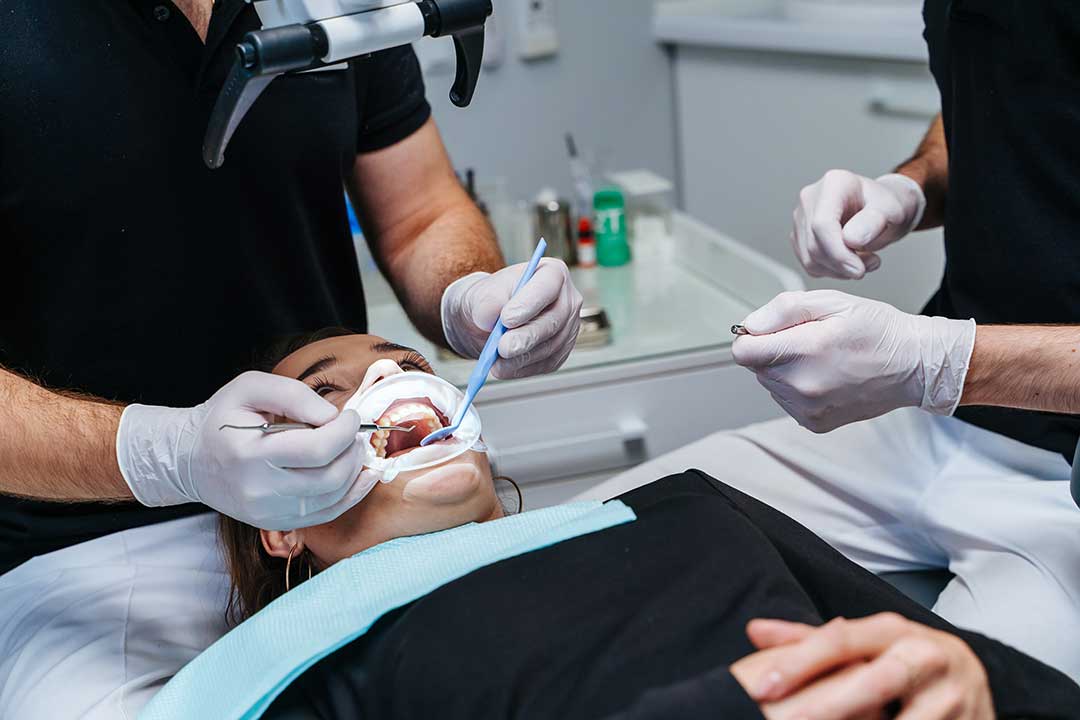
No. “Minimally invasive” describes the amount of healthy tissue affected, not a promise that treatment will never involve a drill, anesthetic, or discomfort.
Some preventive treatments require no drilling. Other cases still require decay removal and a filling. A small restoration may be more conservative than waiting until the cavity becomes deep enough to require a crown, root canal treatment, or extraction.
Pain is also not a reliable measure of severity. Early decay may cause no symptoms, while sensitivity can result from several different conditions, including exposed root surfaces, enamel wear, cracks, gum recession, or pulp inflammation.
Who may benefit from this approach?
Minimally invasive dentistry can be useful for children, adults, and older adults, but the specific strategy varies.
Children and teenagers may benefit from risk-based fluoride use and sealants because newly erupted permanent molars have deep grooves. Adults may need attention to frequent snacking, acidic beverages, dry mouth, gum recession, or older restorations. Older adults can face increased root-cavity risk when gums recede or medications reduce saliva.
For residents of Baton Rouge, seasonal heat and long periods of outdoor activity may make hydration habits especially relevant. Drinking water is generally preferable to frequent sipping of sweetened or acidic beverages. People who experience persistent dry mouth should also consider whether medications, medical conditions, mouth breathing, or dehydration may be contributing.
What happens during a minimally invasive evaluation?
An evaluation usually involves more than looking for obvious holes. It may include:
- Reviewing past cavities, fillings, sensitivity, diet, medications, and dry-mouth symptoms
- Examining teeth for early and advanced lesions
- Assessing plaque, gum health, exposed roots, and existing restorations
- Using dental radiographs when hidden decay or bone-related concerns need evaluation
- Estimating the likelihood that a lesion will progress
- Comparing preventive, nonrestorative, and restorative options
- Establishing a plan to monitor areas that do not require immediate treatment
Monitoring does not mean ignoring a problem. It means documenting its appearance and checking whether it is stable, becoming harder, or developing signs that require additional care.
What are the limitations?
Minimally invasive dentistry cannot preserve a tooth that is too structurally compromised to function safely. A large cavity, fracture, infection, severe wear, or deep decay may require more extensive treatment.
The approach also depends on follow-through. Fluoride, sealants, and monitoring work best when plaque control, diet, and follow-up are consistent. A treatment that arrests decay may not restore the tooth’s original shape or appearance.
The central idea is simple: identify disease early, control the causes, and remove or repair only what is necessary. For many patients, that can mean fewer invasive procedures, more preserved natural tooth structure, and better long-term information about why problems developed.